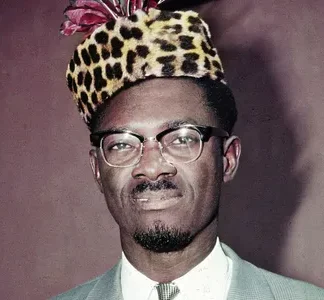

Patrice Lumumba was born on 2 July 1925 as Isaïe Tasumbu Tawosa to Julienne Wamato Lomendja and her husband, François Tolenga Otetshima, a farmer, in Onalua, in the Katakokombe region of Kasai Province in the Belgian Congo.
He is remembered as Congo’s firebrand, a Pan-African legend and a martyr for democracy in the Democratic Republic of Congo, who rose from a postal clerk to Prime Minister in 1960.
Raised in a Catholic family, Lumumba was educated at a Protestant primary school, a Catholic missionary school and later the government post office training school, where he completed a one-year course with distinction.
From an early age, Lumumba was known for his sharp intellect and outspoken nature. As a student, he often pointed out the errors of his teachers in front of his peers, a trait that would later define his political life. He spoke Tetela, French, Lingala, Swahili and Tshiluba.
In 1955, Lumumba became regional president of a purely Congolese trade union of government employees, which was not affiliated with either of the Belgian trade union federations, socialist or Roman Catholic. He also became active in the Belgian Liberal Party in the Congo.Though conservative in some respects, the party was not linked to the trade unions, which were hostile to it.
In 1956, Lumumba was invited, along with others, on a study tour of Belgium under the auspices of the minister of colonies. Upon his return, he was arrested on charges of embezzlement from the post office. He was convicted a year later and, after reductions to his sentence, was imprisoned for 12 months and fined.
After his release, Lumumba became even more deeply involved in politics. In October 1958, he and other Congolese leaders founded the Congolese National Movement, the first nationwide political party in the Congo.
That December, he attended the first All-African People’s Conference in Accra, Ghana, where he met nationalist leaders from across the continent and became a member of the conference’s permanent organisation. Inspired by Pan-African ideals, his political outlook grew more militant and nationalist.
As nationalist agitation intensified, the Belgian government announced a programme aimed at leading the Congo towards independence, beginning with local elections in December 1959. Nationalist leaders dismissed the plan as an attempt to install compliant leaders before independence and called for a boycott. The authorities responded with repression. On 30 October, clashes in Stanleyville resulted in about 30 deaths, and Lumumba was imprisoned on charges of incitement.
The MNC later shifted strategy, contested the elections and won a sweeping victory in Stanleyville, securing about 90 per cent of the vote. In January 1960, the Belgian government convened a Round Table Conference in Brussels with Congolese political parties to discuss independence. The MNC initially refused to attend without Lumumba, who was subsequently released and flown to Brussels.
The conference agreed on 30 June 1960 as Independence Day, with national elections scheduled for May. Despite the large number of political parties, the MNC emerged clearly ahead, and Lumumba became the leading nationalist figure. Efforts to block his rise failed, and on 24 June 1960, he formed the Congo’s first government.
After 75 years of Belgian rule, the Congo finally gained independence. Lumumba’s Independence Day speech was extraordinary. Many have said he did not merely deliver a speech; he ignited a moment of reckoning.
Rather than offering gratitude to the colonial power, he spoke bluntly about injustice, declaring that Congolese people had endured humiliation, exploitation and violence, and asserting their determination to build a free, united and dignified nation. His words shocked many in Belgium and resonated deeply across Africa.
Lumumba stood firmly for genuine sovereignty, not neocolonial control, national unity in a deeply divided country, Pan-African solidarity and social justice, including land reform, education and healthcare.
Days after independence, the young nation descended into crisis. An army mutiny broke out, followed by the secession of the mineral-rich Katanga Province in July. Belgium sent troops to the region. When the Congo appealed to the United Nations, peacekeepers were deployed but not to Katanga. In response, Lumumba sought assistance from the Soviet Union, a move that alarmed Belgium and the United States.
In September 1960, President Joseph Kasavubu dismissed Lumumba, a decision he rejected. Shortly afterwards, a military coup led by Colonel Joseph Mobutu removed him from power. Lumumba was placed under house arrest, escaped briefly, but was recaptured in December.
On 17 January 1961, Lumumba and two close associates, Joseph Okito and Maurice Mpolo, were flown to Katanga, where they were later executed by a Katangan firing squad, with the involvement of Belgian officials.
In the aftermath, efforts were made to conceal their deaths. For decades, Lumumba’s remains were unaccounted for. In 2022, a single tooth, taken by a Belgian policeman, was finally returned to his family.
Though long dead, Patrice Lumumba’s name continues to echo in protests and political movements around the world. His son, François Lumumba, has worked to preserve his legacy.
Lumumba remains a powerful symbol of resistance against imperialism and a lasting voice for African self-determination.