

The Federal Government has commenced steps to strengthen and coordinate Nigeria’s response to childhood lead exposure, in line with the global resolve to eliminate it by 2040.
The move will see the Federal Ministry of Health and Social Welfare establish a technical working group and conduct a national survey to generate reliable exposure data.
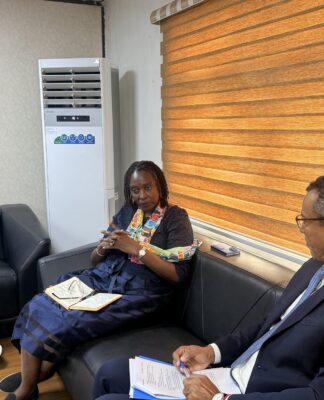
The Permanent Secretary of the Ministry, Daju Kachollom, mni, announced the measures while receiving a delegation from the Partnership for a Lead-Free Future, led by Mr. Abdullah Fadill, in Abuja. The Partnership is an alliance comprising UNICEF, the World Health Organization (WHO), the Clinton Health Access Initiative (CHAI), Resolve to Save Lives, the World Bank and other international organisations.
Kachollom said Nigeria’s commitment to the 2040 goal must be a national effort, requiring coordinated action across government, development partners and other stakeholders to protect children’s health and safeguard the country’s human capital.
”With lead exposure elimination, protecting Nigeria’s human capital opportunity is key. The outcome outweighs anything else,” she said.
She noted that the health sector has in recent years moved from working in silos towards a more coordinated approach through the Sector-Wide Approach (SWAp), with the 2023 Health Compact, signed by all 36 states and subsequently expanded to include development partners, providing a platform to extend coordination to the lead exposure response.
The Permanent Secretary assured the delegation that the Ministry would move swiftly to constitute a technical team and develop its Terms of Reference. She further disclosed that in the coming months, the Ministry would conduct a standardised national survey on childhood lead exposure to establish the burden and generate evidence to guide interventions.
Earlier, the delegation highlighted the significant public health burden of lead exposure in Nigeria and globally, citing WHO estimates that about 80 million children in Nigeria are exposed to lead, with children aged 9 to 59 months particularly vulnerable to its effects on cognitive development and long-term health, even at low levels of exposure.
Mr. Fadill noted that lead exposure is associated with substantial mortality globally and can affect learning, nutrition, anaemia, mental health and vital organs. In children, he said, it can lower IQ by an estimated three to seven points, with significant economic consequences.
He commended the Federal Government’s sustained efforts and the Ministry’s adoption of SWAp, expressing optimism that its principles would further strengthen Nigeria’s response by bringing relevant sectors together around a common national goal.
He called on the Ministry to convene relevant Ministries, Departments and Agencies and establish a Technical Working Committee, assuring that the Partnership would continue to mobilise support and resources required to advance Nigeria’s efforts towards the 2040 elimination goal.
The Permanent Secretary commended the Partnership for a Lead-Free Future for its continued support and reaffirmed the Ministry’s commitment to working with all relevant stakeholders to protect Nigerian children from the lifelong consequences of lead exposure, in line with the Renewed Hope Agenda’s focus on protecting the health and future of Nigerians.