
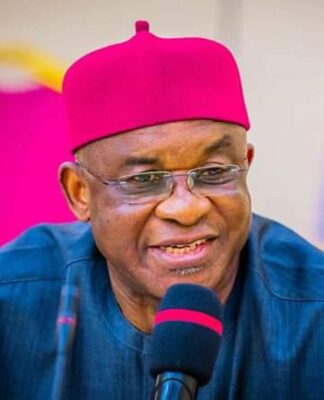

Many Nigerians know David Mark as a former Senate President, but fewer are aware that he also rose to the rank of Brigadier General in the Nigerian Army, a background that shaped his leadership style in public service.
Born in 1948, Mark served as the Military Governor of Benue State between 1984 and 1985 during Nigeria’s military era.
Although his tenure was brief, analysts have noted that he pursued infrastructure development, including road construction and water projects, while placing emphasis on agriculture and food production.
Despite the challenging political climate of the period, his early leadership reflected administrative discipline and a commitment to development.
Mark returned to national prominence in the democratic era after joining the Peoples Democratic Party in 1999. His most enduring legacy came between 2007 and 2015, when he served as Senate President of the Sixth and Seventh National Assemblies, making him the longest-serving head of Nigeria’s upper legislative chamber.
Under his leadership, the Senate played a central role in shaping Nigeria’s legislative direction. One of the most notable achievements of the period was the passage of the 2014 Electoral Act, widely regarded by political analysts as a significant milestone in Nigeria’s electoral reform process.
The Act strengthened the autonomy of the Independent National Electoral Commission, expanded its operational powers, and introduced the use of electronic voter accreditation through card readers. It also addressed campaign finance regulation, electoral dispute resolution and the streamlining of election tribunals.
Beyond electoral reforms, the Mark-led Senate initiated constitutional amendment bills aimed at strengthening democratic governance, promoting devolution of powers and improving electoral integrity.
The chamber also passed key security-related legislation, including anti-terrorism and anti-piracy bills, at a time when Nigeria was grappling with rising security challenges.
Economic growth featured prominently on the Senate’s agenda. Lawmakers supported legislation designed to boost local industries and agriculture, while the chamber consistently exercised its oversight responsibilities through investigations, public hearings and probes into government spending and major contracts.
Contrary to claims often made in later years, the Senate under David Mark was not without robust debate. Although dominated by the PDP, the chamber witnessed disagreements across party lines. Bills were subjected to scrutiny, clauses were amended where necessary, and executive proposals were openly contested.
Controversial legislation such as the Same-Sex Marriage Prohibition Act and the Anti-Terrorism Bill generated intense debate, particularly over civil liberties and the scope of security agencies’ powers.
Budget deliberations were also marked by disagreements, as seen during the 2013 budget debates, while amendments to the Electoral Act sparked differing views over the extent of INEC’s authority.
These moments underscored a legislature that, while imperfect, functioned with a degree of independence and institutional maturity.
Although the Senate under Mark faced criticism for perceived slow responses to insecurity and occasional accusations of excessive alignment with the executive, many observers acknowledge that his tenure strengthened legislative processes, committee systems and institutional stability.
In retrospect, David Mark’s career, spanning military service, state governance and legislative leadership, reflects a significant chapter in Nigeria’s political evolution, marked by influence, controversy and lasting institutional impact.