
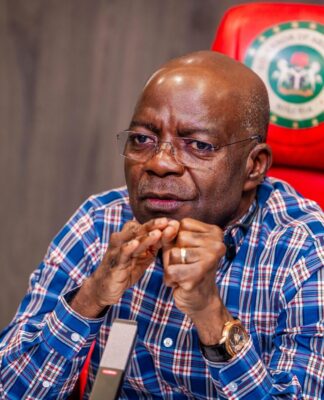

Worried by the persistent and tragic loss of lives ensuing from recurring road traffic accidents along the Waterside–Ogbor Hill axis, the Foundation for Environmental Rights, Advocacy & Development (FENRAD), has appealed to Governor Alex Otti to prioritise the provision of critical infrastructure.
The organisation also hinted that part of measures to stem the tide include: construction of flyovers and pedestrian (overhead) bridges, as well as embarking on a comprehensive road redesign to effectively separate vehicular and human traffic.
According to FENRAD, these interventions are necessary to improve traffic conditions, reduce congestion, and eliminate dangerous conflict points along the corridor.
It also urged the Governor Alex Otti led government in the state to commission an independent traffic, environmental, and social impact assessment to guide sustainable solutions.
FENRAD added that complementary measures should include: modern traffic control systems, proper signage, speed-calming mechanisms, strict enforcement of road safety regulations, and public sensitisation.
The frontline Environmental Rights and Human Rights Advocacy Organisation in Nigeria, decried that the corridor remains one of the most accident-prone areas in the state, with frequent incidents involving heavy vehicular congestion, uncontrolled traffic movement, pedestrian exposure, and poor road safety infrastructure.
A statement issued to newsmen on Sunday by the Executive Director Foundation for Environmental Rights, Advocacy & Development (FENRAD), Comrade Nelson Nnanna Nwafor, the organsation frowned that the recurring accidents have led to avoidable deaths, serious injuries, and destruction of livelihoods, raising serious human rights and public safety concerns.
According to FENRAD, Waterside–Ogbor Hill axis serves as a major commercial and transportation hub, experiencing intense vehicular and pedestrian traffic daily, stating that absence of modern traffic engineering solutions such as flyovers, overhead pedestrian bridges, and effective traffic flow systems, has significantly worsened congestion and increased the risk of fatal accidents.
It emphasised that infrastructure development must be proactive, inclusive, and people-oriented, pointing out that the right to life, safety, and a secure environment is fundamental, and no community should continue to endure preventable deaths due to inadequate planning or delayed government response.
FFENRAD said, “Road safety is a human rights issue. When citizens repeatedly lose their lives due to poor traffic management and unsafe infrastructure, urgent corrective action becomes a moral and constitutional obligation.”
It also called on relevant ministries, road safety agencies, urban planners, and traffic management authorities to collaborate transparently and act without delay just as it encouraged civil society organisations, community leaders, and the media to sustain advocacy efforts toward lasting and life-saving solutions.
FENRAD pledged to remain steadfast in its commitment to environmental justice, sustainable development, and the protection of human rights, assuring that it will continue to engage stakeholders to ensure that residents of Aba and Abia State enjoy safe, efficient, and humane transportation infrastructure.